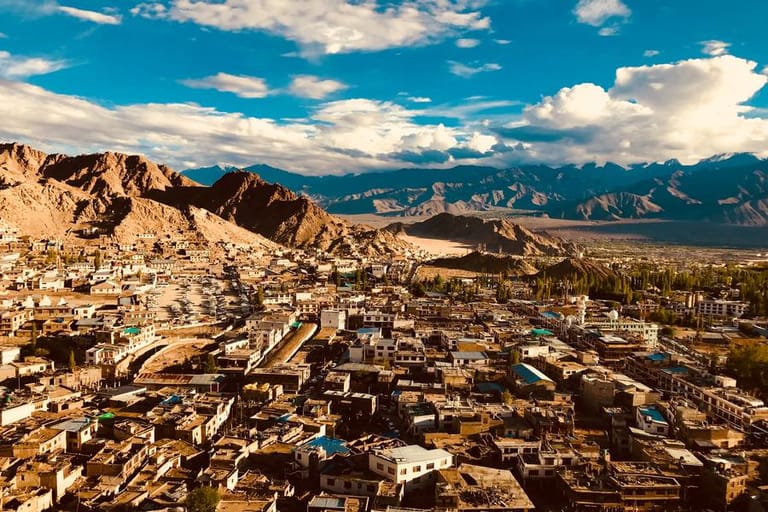
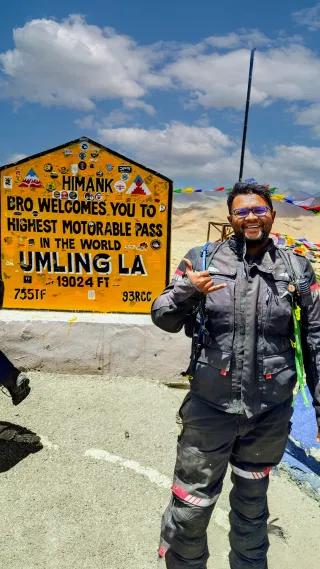
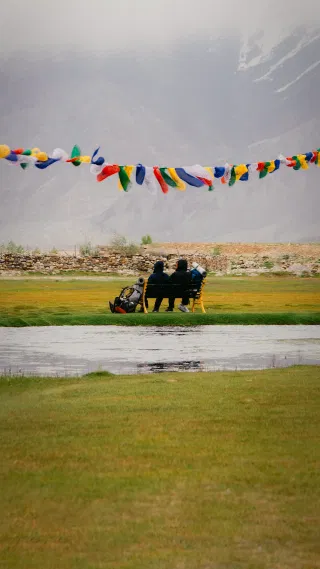
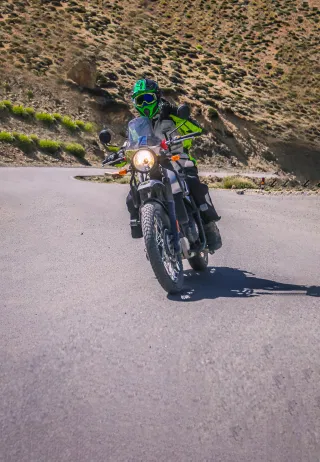
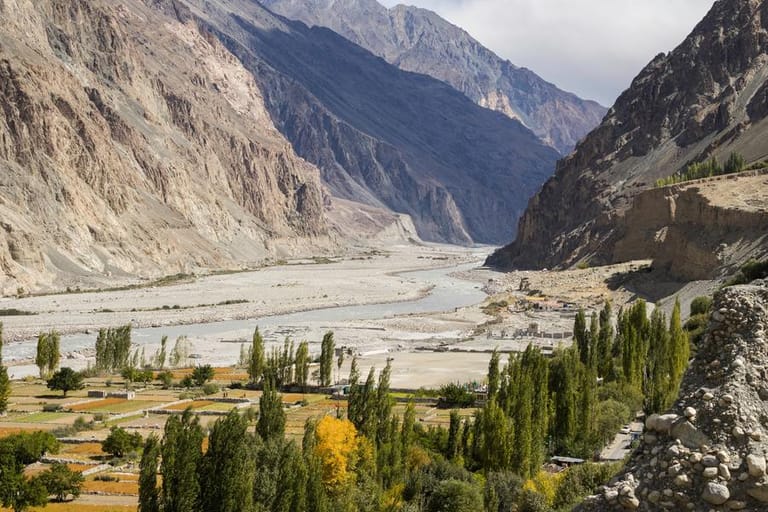
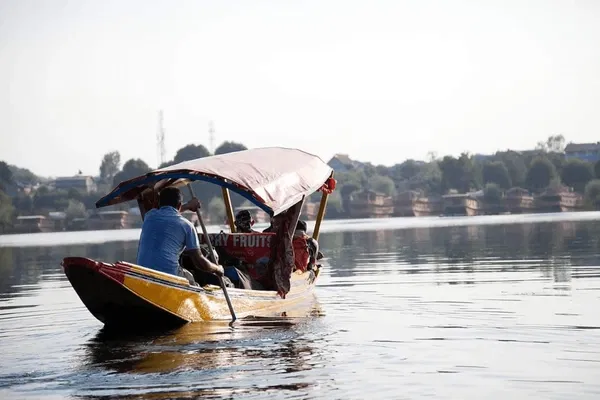
Ladakh is more than just a travel destination ; it is a test for your plans and sense of adventure. But with correct tips for travelling in Ladakh, every challenge and test becomes rewarding and worth it. From crossing high-altitude passes such as Khardung La to exploring some of the best hidden gems of Ladakh , each day in this cold desert feels like an adventure.
Ladakh travel tips play a major role in making any of your Leh Ladakh tour packages successful. Think acclimatization, obtaining Inner Liner Permits and Acute Mountain Sickness (AMS) prevention, travel in Ladakh can become much easier with right tips and planning.
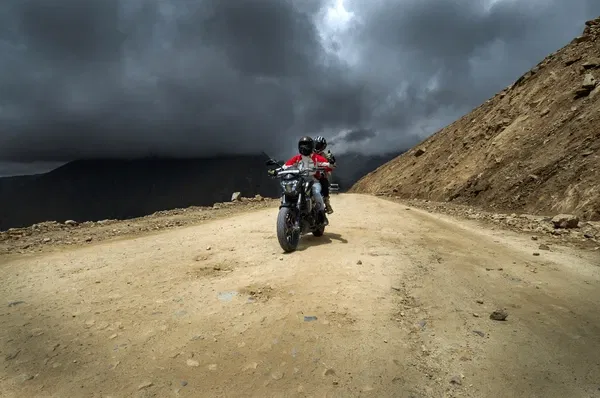
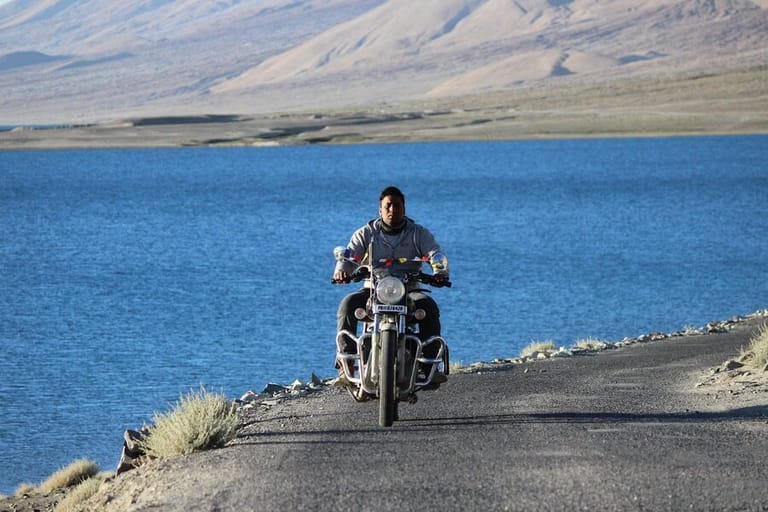
For thrill-seekers, Leh Ladakh bike trip packages offer the ultimate high-altitude adventure, but they require even deeper planning that is backup fuel, protective gear, oxygen cylinders, and physical stamina. From route selection (Srinagar-Leh or Manali-Leh) and what to pack to altitude sickness prevention and obtaining all required permits, here is how to travel responsibly in Ladakh.
Why Travelling in Ladakh Needs Special Preparations?
- High-altitude: The high-altitude and low-oxygen environment creates a high risk of acute mountain sickness in Ladakh (headaches, vomiting, and exhaustion).
- Low oxygen levels: Because of the high altitude (3,000 m–5,000 m+), oxygen levels in Ladakh are quite low.
- Harsh environment: Ladakh is a cold desert with rapid fluctuations in temperature; for example, it can be below 5 °C at night during the peak summer.
- Remote locations with limited facilities: There are very few ATMs, fuel stations, and networks available outside of Leh.
- Permit requirements: Inner Line Permits (ILP) are required for all visitors if you plan to travel to any area near the border.
- Physical demands: Travelling in rugged mountain terrain requires a high level of physical fitness, as well as mental preparation.
- Acclimatisation requirement: Due to the altitude of Leh (3,500 m), it is necessary to take 24–48 hours to rest and adapt to the changes.
What Is The Best Time To Visit Ladakh?
One of the best and the most important Leh Ladakh travel tips is to choose the best time to visit Ladakh.
Peak Season (June to September)
- Peak season, from June to September is considered one of the best times to visit Leh Ladakh.
- During these months, Ladakh experiences pleasant weather, with temperatures ranging from 10°C to 25°C, ideal for sightseeing and outdoor activities.
- All major roads including Manali-Leh Highway and Srinagar-Leh Highway are usually open and accessible.
- These months are perfect for a Leh Ladakh bike trip and adventures.
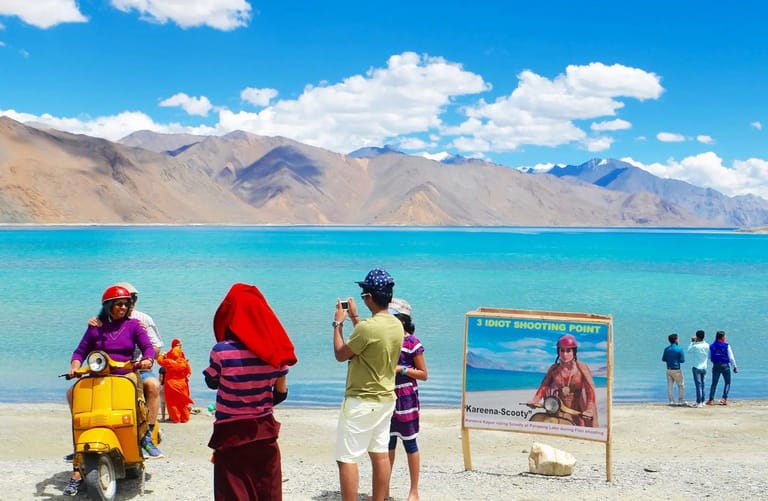
- June to September offers breathtaking and clear views of Pangong Lake and dunes of Nubra Valley.
- If you are an adventure fanatic, then June to September is the perfect time to enjoy activities such as river rafting on Zanskar River.
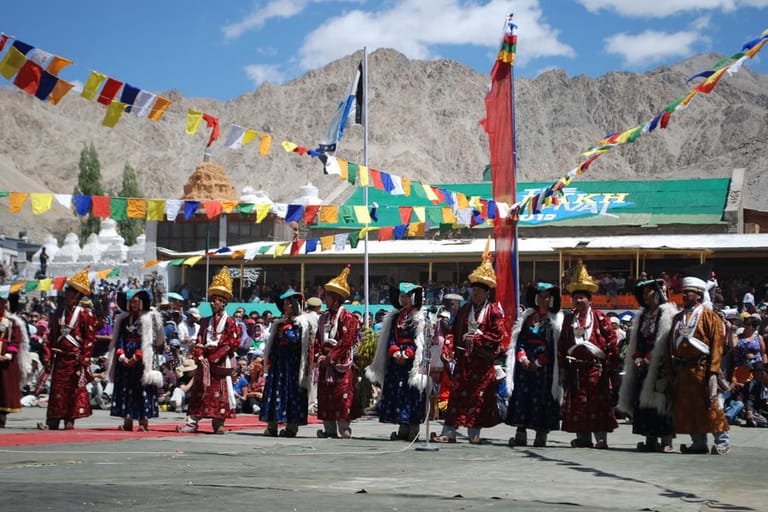
- June is also the best time to experience the iconic Ladakh Hemis Festival.
Shoulder Season (April to May and October)
- Ladakh experiences a shoulder season from April to May and in October, with daytime temperatures ranging from 8°C to 18°C and nights can drop below freezing.
- April is when the snow begins to melt, the valleys start to show hints of green, and the air is crisp yet refreshing.
- April to May is the perfect time to enjoy the colourful Apricot Blossom Festival, when villages in Sham Valley turn pink and white.
- Popular places to visit in Ladakh remain comparatively less crowded and peaceful during the shoulder season.
- Manali-Leh Highway may open mid to late in May and close early in October depending on snowfall.
Off season (November to March)
- Winter in Ladakh unveils a completely surreal and dramatic side of the region between November to March.
- The temperatures range from -2°C to -30°C (in some parts), especially during colder waves.
- January to February is the time when you can experience the legendary Chadar Trek on Zanskar River.
- Most of the roads including Manali-Leh Highway and Srinagar-Leh Highway, passes such as Khardung La and guesthouses are closed and inaccessible during these months.
- These colder months bring heavy snowfalls, covering Ladakh under a thick blanket of snow.
Must Read: Must- Know Tips for Leh Ladakh Bike Trip: A Detailed Guide
Essential Tips For Travelling In Ladakh
1. Acclimatize To The New Surroundings
One of the most important Ladakh travel tips is to acclimatize yourself to the new surroundings like your life depends on it because it actually does. Since, parts of Ladakh, especially Leh, are located over an altitude of 3,500 meters, low oxygen levels can trigger Acute Mountain Sickness (AMS).
Travel in Ladakh requires acclimatization and the best way to avoid it is by spending the first 24-48 hours in Leh to adjust to the new surroundings. Avoid adventurous activities and heavy sightseeing.
Furthermore, ensure that you take rest for about a day or two after every climb of 600-1000 metres. Another thing to keep in mind is not to increase your sleeping elevation by more than 300-500 metres per day.
2. Keep Medicines Handy For Acute Mountain Sickness
A trip to Leh Ladakh can be tricky and challenging, especially because of Acute Mountain Sickness. One of the most essential Ladakh travel tips is to keep medicines for AMS handy, even after acclimatization, at all times due to high-altitude and low oxygen levels.
The symptoms of acute mountain sickness include dizziness, headache, fatigue, loss of appetite, nausea, vomiting and loss of breath. It is strongly recommended to consult a doctor before your Leh Ladakh trip for preventive medications.
It is also recommended to carry ORS sachets and other medications since many areas have limited medical amenities. If the symptoms worsen, it is best to descend immediately.
One of the most simple yet most crucial tips for travelling in Ladakh is to stay hydrated to avoid altitude sickness. Movement in high altitude regions and low humidity can cause fast fluid loss and dehydration.
Make sure to consume 3-5 litres of water every day and take small sips every 15-20 minutes to keep your body hydrated. Other than water, consume herbal teas and ORS to maintain hydration and warmth in your body.
Carry a reusable water bottle with you at all times during sightseeing and road journeys to ensure easy and quick access. Avoid alcohol, smoking and caffeine, which can further accelerate dehydration.
Another important addition to your Leh Ladakh travel tips is to be fit, not just physically but mentally as well. Ladakh’s rugged terrains, high-altitude and extreme weather conditions can be physically challenging.
Due to lower oxygen levels, even short walks or treks can feel exhausting and tiring. The best way to prepare for your Leh Ladakh trip is to start light cardio workouts such as running, jogging and stair climbing at least 4 weeks prior.
If you have any health conditions, it is best to consult your doctor before planning your trip so that you are best prepared to handle the journey. You may also carry a medical kit and understand its full use. Further, it is also essential to be aware of things that ensure a fit trip, like acute mountain sickness in Ladakh.
5. Get All The Required Permits
One of the most mandatory Ladakh travel tips is to secure all the required permits. If you are an Indian citizen planning to travel in Ladakh in restricted/protected areas such as Pangong Lake, Tso Moriri, Nubra Valley and Turtuk, you need to obtain an Inner Line Permit (ILP).
Foreign nationals need a Protected Area Permit (PAP) to visit these areas in Leh Ladakh. Along with these permits, every visitor needs to pay environmental fees for Ladakh, a "Green Fee" and wildlife fee.
These permits can be obtained online through the Leh Administration Official Portal or offline through District Magistrate's Office or the Tourist Information Center in Leh. Documents such as valid ID proof (Aadhar Card, Passport, Voter ID, Driving License) for Indians, and passport with valid visa for foreigners will be required to obtain the permits.
Make sure to carry multiple copies of the permits as you will need to submit them at various checkposts while going to various Ladakh travel destinations.
6. Carry Valid Documents And ID Proofs
One of the most non-negotiable tips for travelling responsibly in Ladakh is to carry valid documents and ID proofs. Since many parts of Ladakh are border sensitive and protected, you will have to go through frequent security checks.
You should carry a government-issued photo ID (Aadhaar, Passport, Voter ID, or Driver's License) and multiple copies if you are an Indian. Foreigners should carry their valid passport with visa with multiple photocopies. Other most important documents include multiple copies of Inner Line Permit (ILP) or Protect Area Permits (PAP).
If you are on your Leh Ladakh bike trip, make sure to carry a driving license, vehicle registration papers, insurance and pollution documents.
Ladakh travel trips often require carrying enough cash, since there are limited or no ATMs in many areas outside of Leh. When travelling to places like Nubra Valley or Pangong Lake in Ladakh, make sure you have enough money to cover all your expenses.
You will find many ATMs in Leh Market of different banks where you can withdraw sufficient cash, since there are no ATMs outside of Leh. For safety purposes, you can split cash between your travel buddies and keep it in a secure bag.
8. Except No Network Zones
If you are planning to travel in Ladakh, then expect limited or completely zero connectivity due to its high-altitude terrain. Mobile signals are highly unreliable, especially outside Leh. When it comes to network connectivity, your best bet is to go for a post-paid SIM card.
One of the best Ladakh travel tips is to have a BSNL postpaid connection, since it is the only connection that works well in Ladakh. Despite that, you should expect weak signals or complete blackout zones in remote areas such as Pangong Lake or Tso Moriri Lake in Ladakh.
Inform your family regarding potential communication interruptions. Another important travel tip for Ladakh is to download offline maps, hotel information, travel plans and permits before leaving Leh.
9. Choose The Route That Suits You
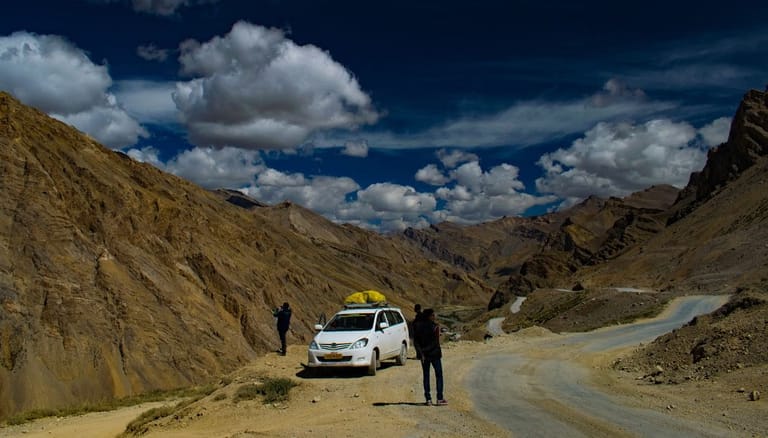
One of the most important tips for travelling in Ladakh is to choose the route that suits you. Your journey to Ladakh affects travel time, road conditions and acclimatization. There are two major routes for a Leh Ladakh road trip, via Manali and via Srinagar.
While both the routes are unique in their own ways, choosing the correct one depends on a lot of factors. The Srinagar-Leh Highway is perfect for first-timers because the altitude gain is gradual surrounded by lush green landscapes. This route allows better acclimatization and reduces the risk of AMS.
On the other hand, Manali-Leh Highway is ideal for experienced travellers and those who appreciate a kick of adrenaline along the way. This challenging yet exciting route will greet you with barren landscapes, rough roads and a rapid ascent.
If you plan on flying into Leh, one Ladakh travel tip you should keep in mind is that you gain altitude very quickly, so make sure to acclimatize very well.
10. Stay At Homestays In Ladakh
Next up in this list of leh ladakh trip advice is the one that might change the way you stay during your travel in Ladakh. Instead of staying in a luxurious hotel, you should stay at some of the traditionally built finest homestays in Ladakh.
They are budget-friendly and offer home-like hospitality. Besides maximising your experience, staying at a homestay in Ladakh helps the local community to boost its economy.
It also helps in sustaining ecology by reducing migrations and preserving local culture and traditions. Moreover, the government is planning to introduce homestays in monasteries as well.
11. Shop Locally Eat Locally in Ladakh
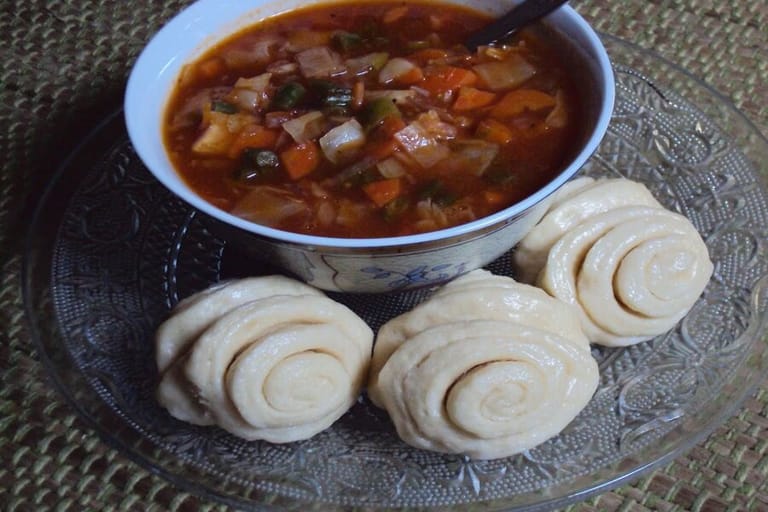
The biggest part of responsible travel in Ladakh is supporting the local community. This helps them develop and flourish and that is the next tip in the list of Leh Ladakh travel tips. When you choose to shop and eat the delicious local food in Leh Ladakh, you not only get the authentic experience but you also help the local economy to boost.
Always make sure to shop from a local shop (not owned by outsiders) and eat from a small cafe owned by the locals. This helps to interact more with people along with a pure experience.
Another important side of travelling responsibly in Ladakh is to be mindful of the impact we have while travelling. Doing small things can really make a big difference in keeping your carbon footprint to a minimum.
You should carry a bag for your leftovers, take public transport, use less water (after all it is a desert, though cold) and travel in groups. Always carry an extra bag to take back all the trash that you might create while travelling.
13. Regard The Locals And The Culture Of Ladakh
A true traveller is one who not just respects the place they travel to, but also its people and culture. Make sure you are warm and kind in your behaviour. Also, one thing you should keep in mind is that this place holds far more significance for the locals than any of the travellers.
You should always respect the culture of Ladakh and its people in all small and large ways. One of the best tips for travelling responsibly in Ladakh is to learn a few common greetings in Ladakhi like hello (Joo-lay), good morning (Nato Deleks), good evening (Photog Deleks) and please take care (Don-lay).
14. Keep Away From Wild Animals in Ladakh
One should never forget the fact that Ladakh is a cold-wild desert and a home to many wild animals. It is an ecosystem for snow leopards, antelopes, yaks, wild asses, golden eagles, rock buntings and many other wild faunas.
These animals might harm you as they often try to protect their territory and young ones. So, it is better to keep away from them than get bitten or scratched and spoil your trip.
One of the most practical tips for travelling in Ladakh is to use shared taxis, especially when you are a solo traveller or on a budget. Shared cabs are readily accessible to take you to famous destinations such as Nubra Valley, Pangong Lake, and Tso Moriri.
Each taxi has a predetermined route that includes the cost per seat; as a result, shared cabs are far more economical than hiring an entire cab alone. This not only allows you to reduce cost but also meet new people along the way.
One of the most important Ladakh travel tips to keep in mind is that the region follows strict local taxi union rules. Any taxis outside of Ladakh, from Manali or Srinagar, are not allowed for internal sightseeing.
16. Use Local Dry Toilets
Being prepared to use dry local toilets is one of the most practical tips for responsible travel in Ladakh. Numerous guesthouses and wayside lodging establishments in remote towns and at elevated altitudes employ dry compost toilets as their primary means of disposing of human waste.
Dry toilets generally use soil or sawdust instead of water to decompose waste naturally. Although it may take time to become adjusted to using a dry toilet, it is probably the most environmentally sustainable solution available for the delicate ecosystem of Ladakh.
If you are going to Ladakh travel destinations such as Nubra Valley, Pangong Lake, or Tso Moriri, anticipate limited facilities will be available at lesser-priced guesthouses and camps. You should carry sanitizers, napkins and wet wipes with you at all times.
17. Be Prepared For Emergencies
Leh Ladakh is located in the northernmost part of the country, making it a remote region. Therefore in case of emergencies or unforeseen circumstances, getting help can be a bit difficult and can usually take time.
One of the best practical Ladakh travel tips is to always be prepared for all kinds of emergencies. It is highly recommended that during your travel in Ladakh, it is suggested to keep a first aid kit along with you at all times or inform your tour operator or hotel about your travel plans to be on the safer side.
Besides the first aid kits, you should also carry essential medicines like Diamox (which helps in dealing with high altitude sickness), Dolo or Paracetamol, which help in dealing with body aches or lowering body temperature. Carrying these will surely ensure smooth and safe travel in Ladakh.
How To Avoid Altitude Sickness In Ladakh?
- Try to ascend slowly if possible: If travelling by car then choose the Srinagar-Leh Highway, since it has gradual ascends. It allows your body to adjust better as compared to directly flying into Leh.
- Acclimatize for the first 24-48 hours: Do nothing too physically demanding for the first 24-48 hours after arriving. Do not plan any sightseeing, trekking or visit to passes.
- Keep your body hydrated: Dehydration can worsen the symptoms of AMS, so it is best advised to have 3-5 litres of water daily. You can also consume soups and herbal teas for hydration.
- Avoid alcohol and smoking: Alcohol and smoking can reduce oxygen absorption and worsen mountain sickness. You should avoid alcohol consumption and smoking for at least the initial days.
- Take medications for AMS: One of the most important Ladakh travel tips to keep in mind is to consult your doctor before planning your Ladakh travel trips. They will prescribe you medicines for AMS, which you should keep handy at all times during your trip.
- Avoid overexertion: Do not exert your body, avoid running or climbing too fast and acclimatize after every climb of 600 metres.
- Descend immediately if symptoms worsen: If you feel your acute mountain sickness symptoms are worsening, it is best to descend immediately.
What To Pack For A Ladakh Trip?
One of the most important tips for travelling in Ladakh is to pack smartly because of the region’s high-altitude, unpredictable weather and dry climate.
- Warm Layered Clothing (Even in summers): Carry Thermal innerwear (top & bottom), fleece or woollen sweaters, down jacket / heavy windproof jacket, woollen cap, gloves & scarf and warm socks (multiple pairs) even during peak season (May–September), as nights in Ladakh can drop close to freezing. Since Ladakh is a Buddhist region, it is important to carry clothes which are in accordance with the beliefs of the people there.
- Comfortable Footwear: Pack Sturdy trekking or hiking shoes (preferably waterproof), extra socks, slippers for hotel stays as roads are rocky, dusty, and uneven—good footwear is non-negotiable.
- Skincare & Sun Protection Essentials: Keep with you at all times SPF 50+ sunscreen, UV-protected sunglasses, lip balm with SPF, heavy moisturizer and cold cream, since the sun in Ladakh is extremely harsh due to high altitude, and the air is very dry. If possible, also carry SPF clothing.
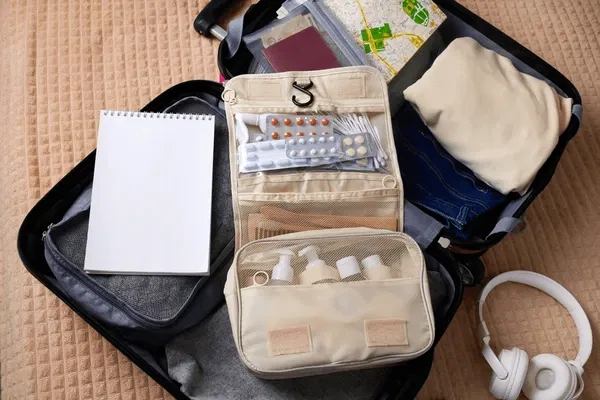
- Medicines & Health Kit: AMS medication (after doctor consultation), basic first-aid kit, ORS sachets, personal prescription medicines and portable oxygen can (optional but helpful). Medical shops are limited in remote regions like Nubra or Pangong.
- Documents & Essentials: Government ID proof (Aadhaar/Passport) and multiple photocopies, Inner Line Permit printouts, hotel confirmations, travel insurance (recommended). Security checks are frequent in border-sensitive areas.
- Cash & Connectivity Backup: Enough cash (ATMs limited outside Leh), Postpaid SIM (BSNL works better), power bank, offline maps downloaded. Expect network blackouts in Nubra Valley and Pangong Lake.
- Bonus Smart Add-Ons: Reusable water bottle, wet wipes & hand sanitizer, snacks (energy bars, dry fruits), small backpack for day trips and camera with extra batteries (cold drains battery fast)
Also Read: Is Leh Ladakh Safe for Solo Female Travelers?
Is Ladakh Safe For Travelers?
Absolutely, travel in Ladakh is absolutely safe for travellers, including solo travelers and women, provided basic precautions are followed. Ladakhi people are warm, friendly and helpful, making a safe space for tourists. The cities of Leh, Nubra Valley and Pangong Lake are highly policed, and the Indian Army has a strong presence in border-secure areas.
However, safety in the Ladakh region is affected more by environmental factors and altitude than by crime. Acute mountain sickness (AMS), unpredictable climate conditions, rockslides, and harsh road conditions pose greater risks than personal safety. However, with safety tips and precautions for Leh Ladakh, it makes for one of the most surreal places to visit in India.