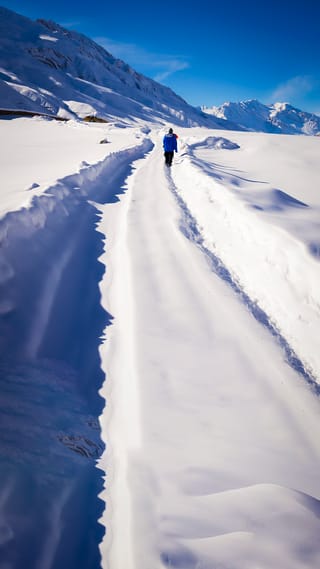
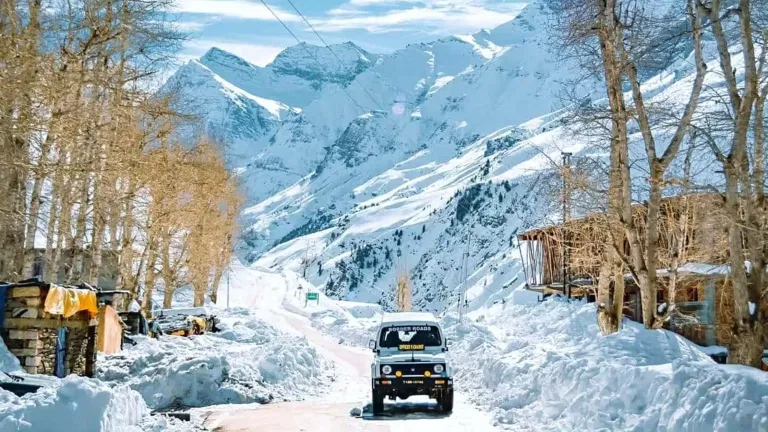
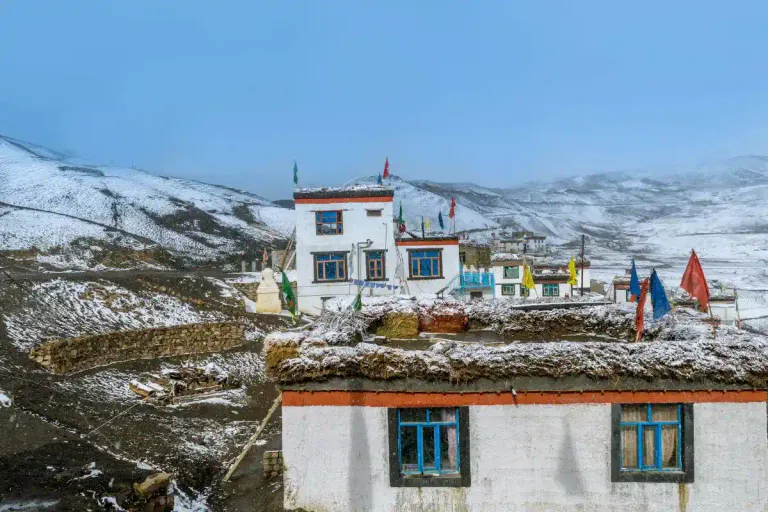
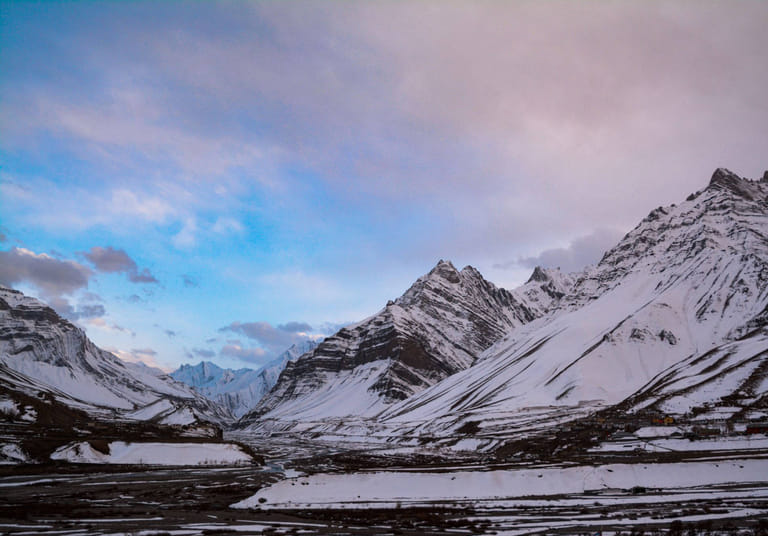
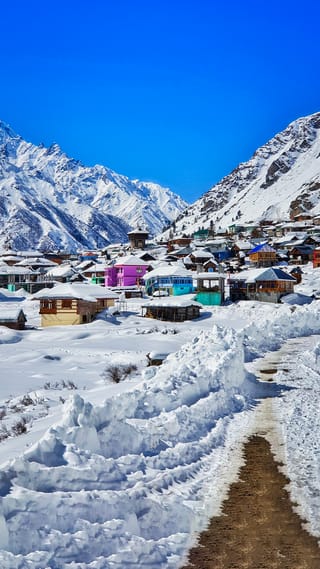
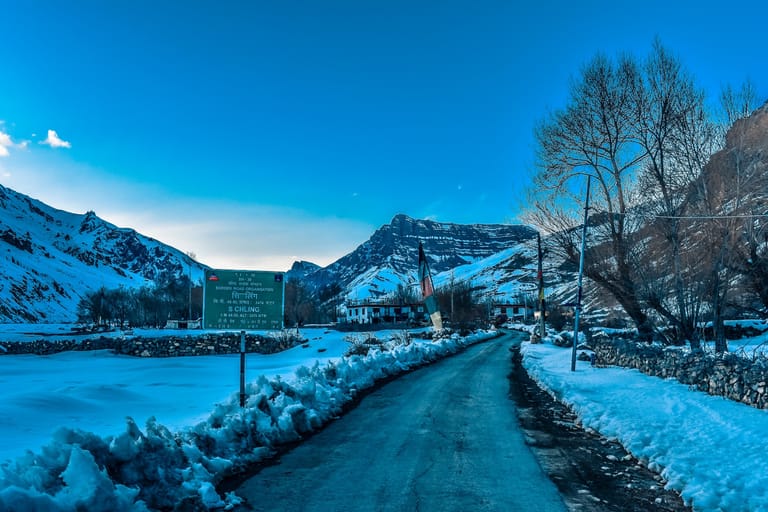
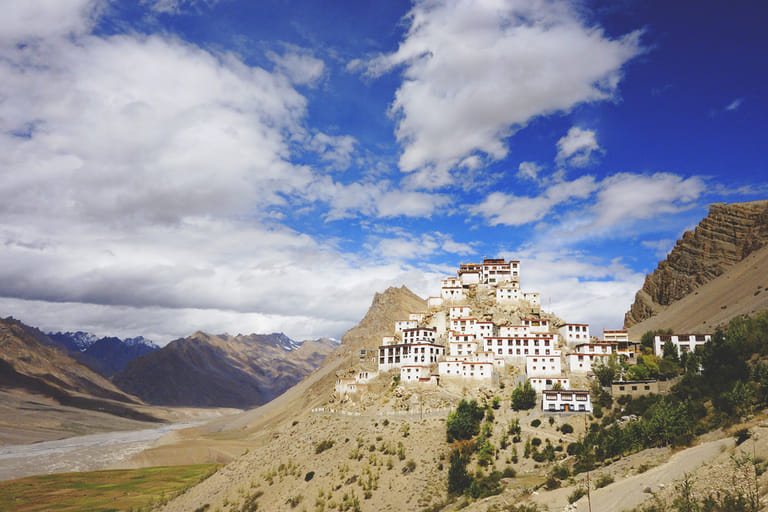
At 12000 ft, you’re surrounded with a panoramic view of endless snow-covered mountains and a sky so blue it almost looks unreal. That’s Spiti Valley in winter! If the thought of exploring Spiti ever crossed your mind, the winter season is calling.
While the summer brings green valleys and bustling crowds, winter Spiti reveals a version that only the luckiest get to see: when the cold desert falls into a deep, peaceful silence, and the raw beauty of the Himalayas truly takes over. Explore our Spiti tour packages to navigate this extreme terrain safely and witness its seasonal transformation this winter.
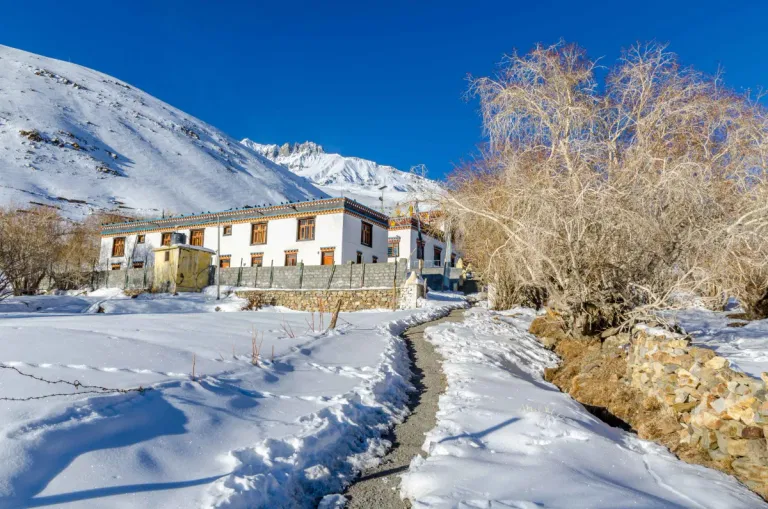
Spiti is a place where strangers become family over a shared Bukhari and photographers spend all night just to capture the Milky Way over a frozen Key Monastery. Yes, the water pipes freeze and the roads are a challenge, but the warmth you find in a Spitian homestay is unlike anything else on earth.
If you’re dreaming of the best Spiti Valley tour in winter 2026, here is everything you need to know.
- Best time to visit: January to March for white Spiti
- Temperature: -5°C during day and -25°C to -30°C at night
- The Experience: 90% fewer crowds, pure white landscapes, and ‘Snow Leopard’ sightings
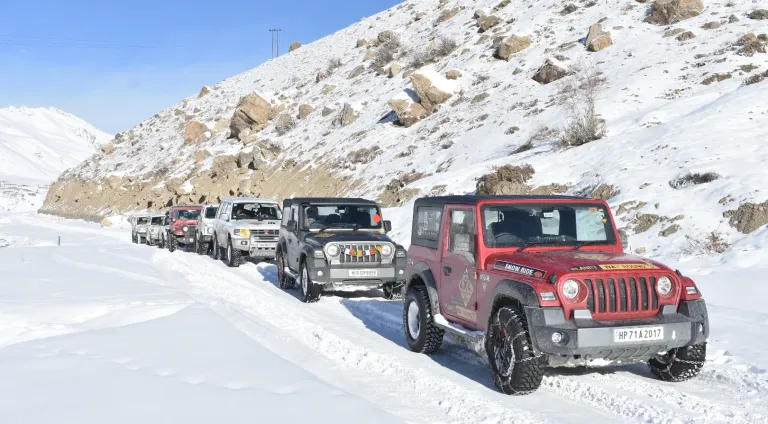
- The Route: Only the Shimla-Kinnaur road is open; Manali-Kaza is closed due to heavy snow
- Connectivity: Limited; BSNL/Jio work in Kaza. Expect a total digital detox elsewhere
- Pro Tip: Pipes freeze in winter. Expect zero running water and limited electricity.
Best-Selling Spiti Tour Packages
Why Is Spiti Valley In Winter More Popular Than Ever?
A winter Spiti trip no longer just for the extreme adventurers. People are realizing that the "off-season" is actually the real season to see this winter wonderland transform.
Despite the sub-zero temperatures, thousands of travellers now head to the Spiti valley in winter from October to March. Here’s what makes it extraordinary attractive during this season:
- The Space Blue Skies: At high altitudes, the winter air is so thin and clean that the sky takes on a deep, dark blue you won't see anywhere else in India.
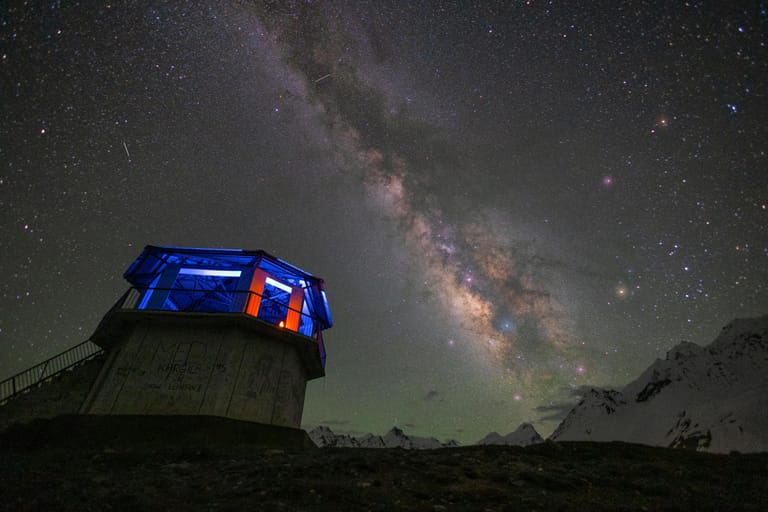
- The World’s Best Stargazing: With zero pollution and moisture in the air, Spiti is one of the best places for stargazing in India. You can see the bright, glittering Milky Way with the naked eye.
- A Living Culture: In winter, crops can’t be grown, so locals have all the time in the world. You’ll spend your evenings drinking butter tea and listening to stories that have been passed down for centuries.
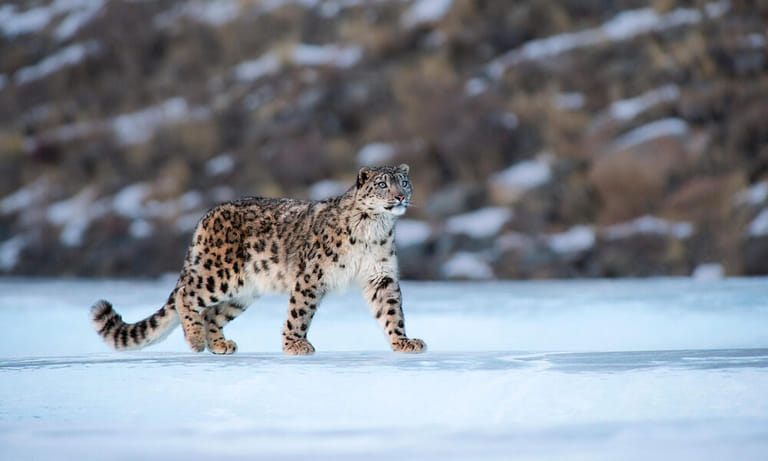
- The Ghost of the Mountains: This is prime time for Snow Leopard sightings, also called ‘the Ghost of the Mountains’. As snow covers the high peaks, these elusive cats descend closer to the villages.
9 Beautiful Places To Visit In Spiti In Winter
Discover some of the best places to visit in Spiti in winter that turn a simple trip into something totally unreal and make your adventure truly legendary.
1. Key Monastery: The Fortress of Faith
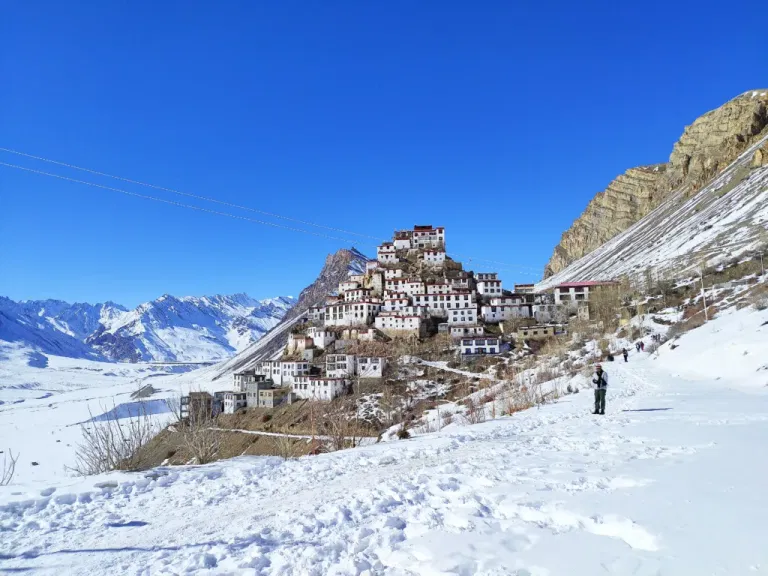
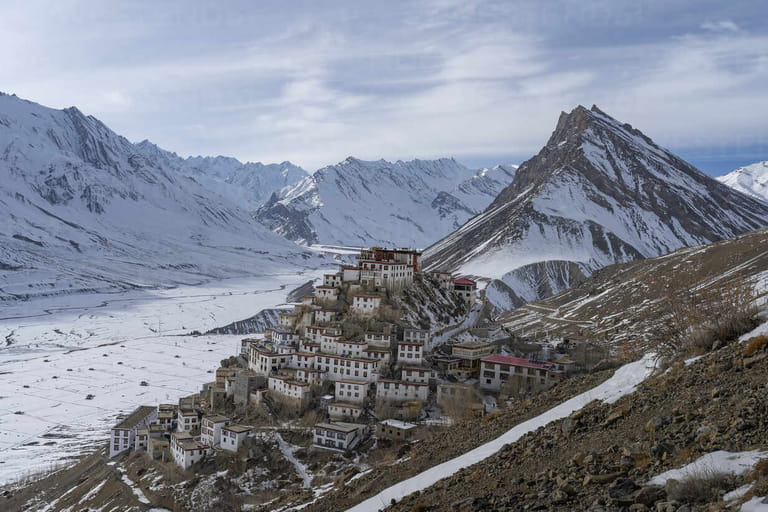
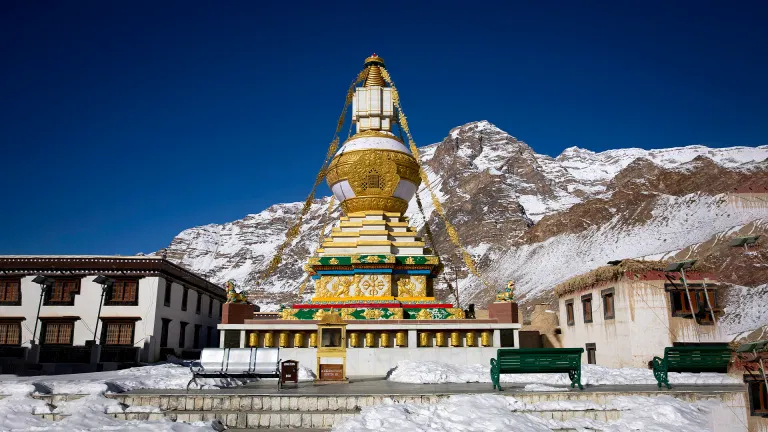
Key Monastery is the largest monastery in Spiti and an important addition in every winter Spiti tour 2026. It’s a living piece of history that looks like a giant white castle resting on a snowy hill, almost unreal at this height. Sitting at over 4,000 meters, Key feels especially powerful in winter, when the crowds disappear and the silence settles in.
This is the place to slow down and feel the spiritual pulse of Spiti. Sitting quietly in the prayer hall while the wind whistles outside is one of those moments that stays with you long after you leave.
- Location: 14 km from Kaza (30-40 minute drive)
- Best time to visit: Late morning to early afternoon, when the road is less icy and the light is softer
- Duration: 1-1.5 hours
- Entry fee: Free
- Food to try: Butter Tea & Khambir (a thick, crusty local bread); most nearby cafes remain closed in winter
2. Langza: The Home of the Golden Buddha
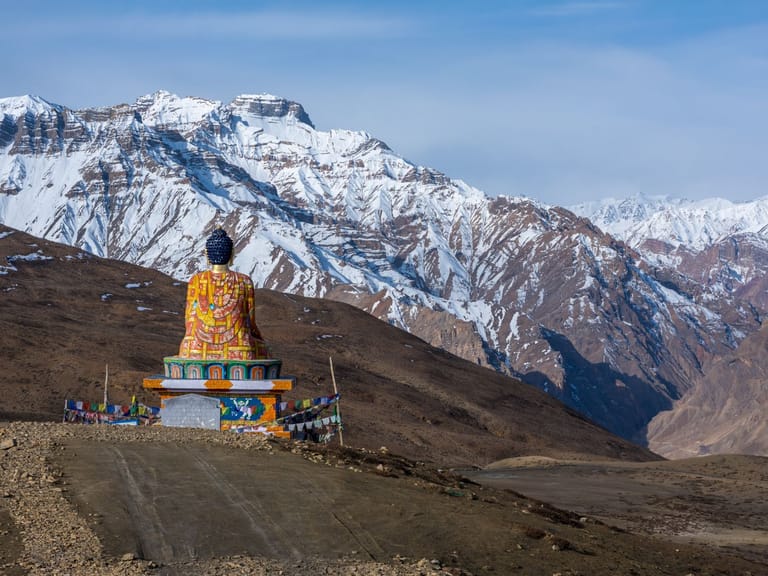
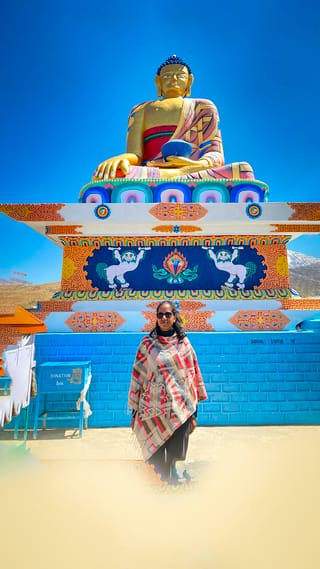
Langza is dominated by a massive, golden Buddha statue that sits in total meditation, facing the white Himalayan peaks. Spiti valley in winter offers a contrast of the bright gold against the blinding white snow is one of the most spiritual sights you'll ever witness.
It’s also famous as the "Fossil Village," where millions-of-years-old marine life is still buried in the ground, making it one of the most unique places to visit in Spiti in winter. Walking through the quiet, snow-draped lanes here feels like you’ve stepped onto another planet entirely.
- Location: 16 km from Kaza (45-50 minute drive)
- Best time to visit: Mid-day, as the golden statue looks magnificent when the sun is directly overhead
- Duration: 1 hour
- Entry fee: Free
- Food to try: Warm Thukpa or Barley Porridge at a local homestay
3. Hikkim & Komic: Living on the Roof of the World
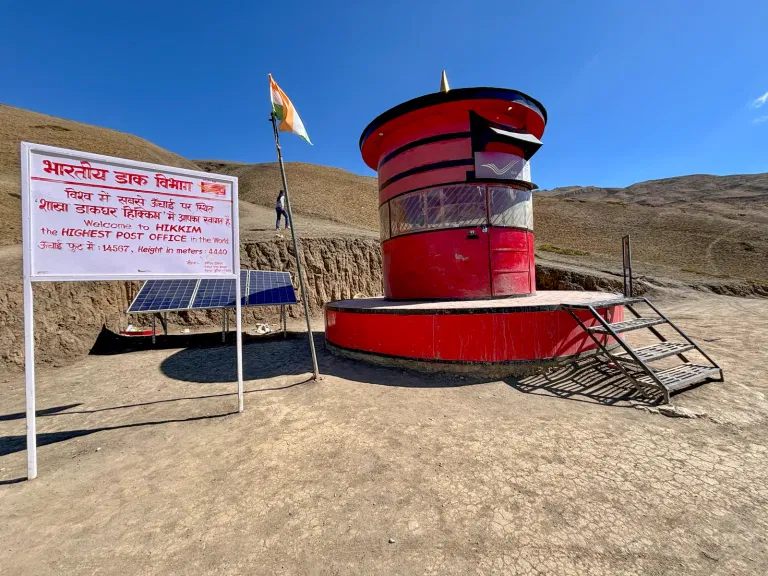
Hikkim is home to the World’s Highest Post Office (4440 m), and sending a postcard from here in deep winter is the ultimate travel flex. Just a short drive away is Komic, the highest village in the world connected by a motorable road at a staggering 4,587 meters.
Being here in winter is a badge of honour; you’re literally at the highest point of civilization. The air is thin, but the feeling of standing on the roof of the world while looking out at a sea of white peaks is a massive adrenaline rush.
- Location: 15-18 km from Kaza (1-hour drive)
- Best time to visit: Early morning to allow for a slow walk (breath is shorter at this altitude!)
- Duration: 2 hours for both villages
- Entry fee: Free
- Food to try: Spicy Thenduk (hand-pulled noodles) that the locals make extra fiery to beat the winter chill
4. Chicham Bridge: Asia’s Highest Suspension Bridge
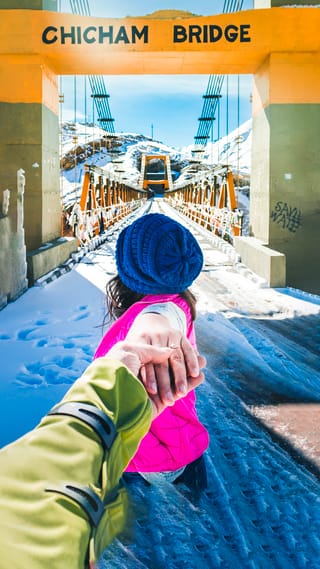
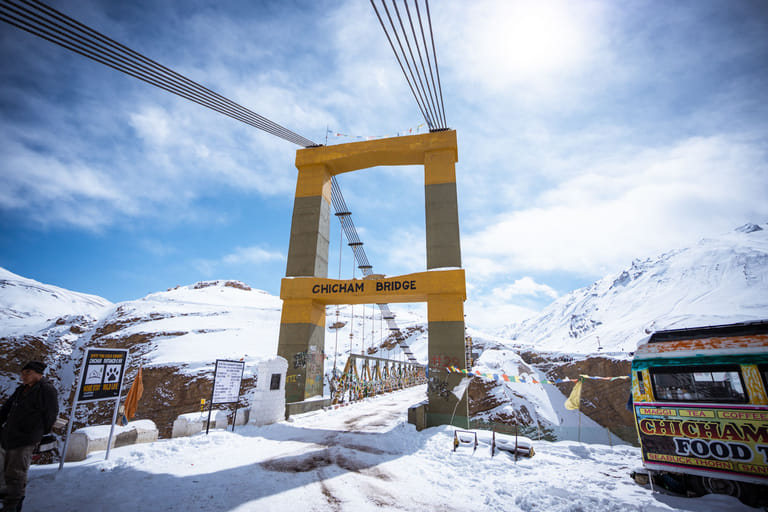
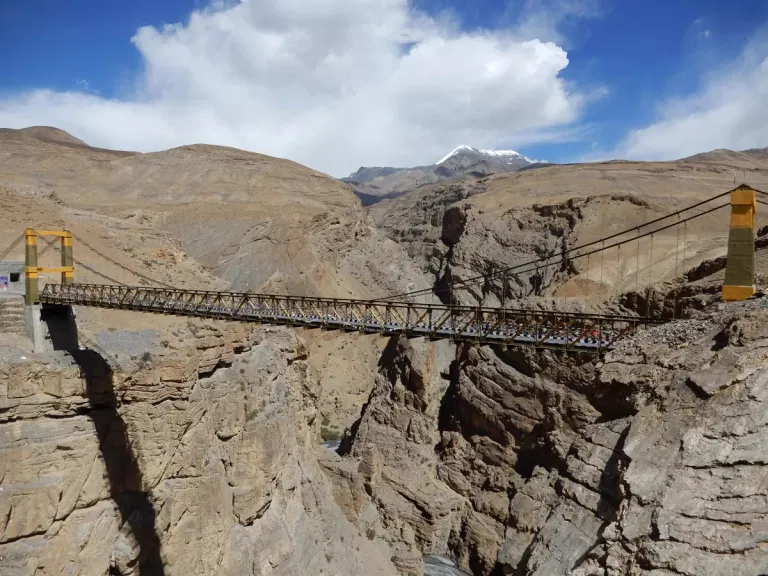
Connecting the tiny villages of Chicham and Kibber, Chicham bridge hangs over a massive 1,000-foot-deep gorge that looks terrifyingly beautiful when frozen. Walking across it at 4,150 meters is a unique experience as the icy wind rushes through the canyon below your feet.
It’s one of the ultimate places to visit in Spiti in winter for photography, looking like a thin metal thread stitching two snowy worlds together. The sheer scale of the landscape here makes you feel wonderfully small in the best way possible.
- Location: 20 km from Kaza (1-hour drive)
- Best time to visit: Sunset, when the gorge shadows create a dramatic, moody landscape
- Duration: 30-45 minutes
- Entry fee: Free
- Food to try: Carry energy bars or chocolate; it’s isolated and most shops near the bridge stay shut
5. Pin Valley: The Frozen Wilderness
Pin Valley is a "Cold Desert" National Park that turns into a white, quiet wilderness during the winter months. It’s one of the most remote places in Spiti and the best place to spot rare wildlife like Ibex or the elusive "Ghost of the Mountains," the Snow Leopard, as they descend toward the river bed at 3,500 meters looking for water.
The landscape here is wider and more rugged than the rest of Spiti, giving you a sense of true isolation. It’s the perfect place for those who want to see nature in its rawest, most untouched form.
- Location: 30 km from Kaza (1.5 to 2-hour drive)
- Best time to visit: Early morning for the best chance of spotting wildlife near the frozen river
- Duration: 3-4 hours
- Entry fee: Free (Forest permits may apply for treks)
- Food to try: Mokthuk (momo soup) & Tingmo (soft, fluffy steamed bread) or Yak milk and cheese
6. Tabo Monastery: The Ajanta of the Himalayas
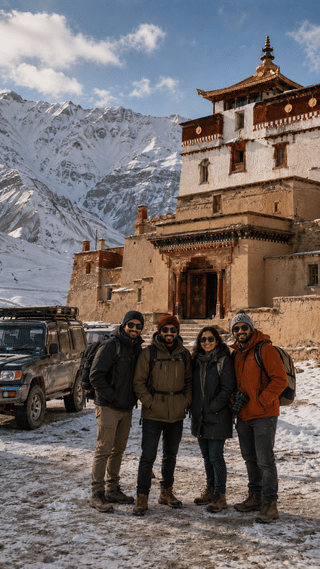
Stepping into Tabo is like walking into a thousand-year-old time capsule. Unlike the white-washed monasteries elsewhere, Tabo is made of mud and filled with ancient frescoes that are so well-preserved they are often compared to the Ajanta Caves.
In Spiti valley in winter, the mud walls provide a natural warmth, and the silence inside the dark prayer halls is profound. It’s a place of deep meditation, where you can feel the weight of centuries of history. Just be careful on the paths leading to the meditation caves above—they turn into icy slides in the winter!
- Location: 48 km before Kaza (1.5 - 2 hour drive from the Tabo gate)
- Duration: 1.5 hours
- Entry fee: Free
- Food to try: Spiti apples, Local rajma & red rice, Keu (Spiti Dumplings), or Salted butter tea
7. Dhankar Monastery: The Cliffside Marvel
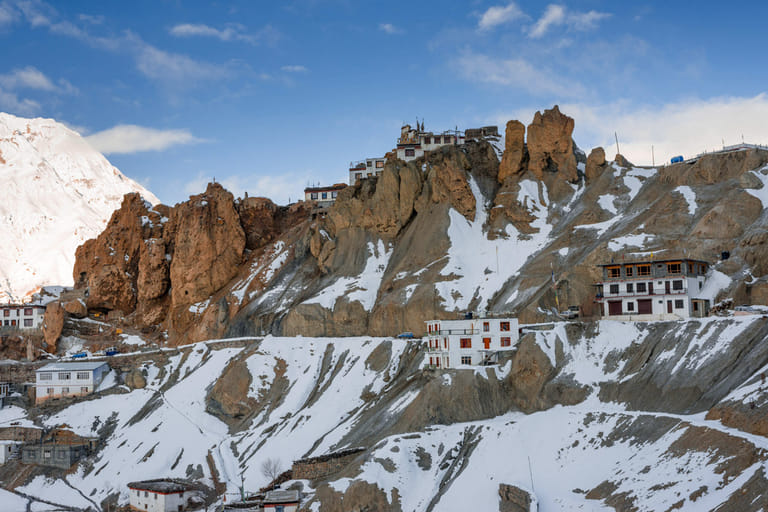
Dhankar is a masterpiece of balance, built right on the edge of a crumbling cliff overlooking the confluence of the Spiti and Pin rivers. In winter, the sight of the frozen river far below and the snow-dusted monastery clinging to the rock is almost dizzying.
It’s famously beautiful but also weather-dependent; a heavy snowfall can shut the road in minutes. If you make it there, you’ll see why the kings of Spiti once chose this as their capital—it feels completely impenetrable and legendary.
- Location: 32 km from Kaza
- Best time to visit: Strictly mid-day to ensure the sun has melted any overnight black ice on the narrow access road
- Duration: 1 hour (subject to road conditions)
- Entry fee: Free
- Food to try: Seer-Chai (Pink tea), barley pancakes,or dal chawal in a local homestay (expect long lines)
8. Kaza Base: The Heart of the Valley
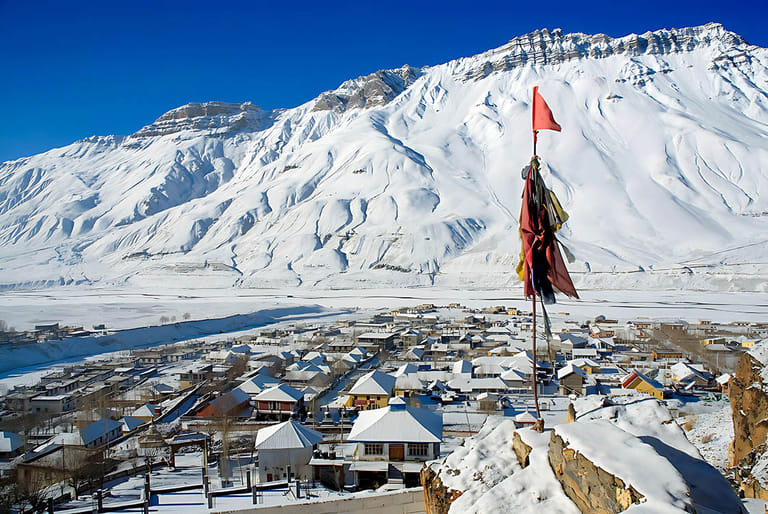
Kaza, situated at 3,800 m, is the main hub of your Spiti in winter itinerary where your journey starts and ends. In the summer, it’s a busy tourist town, but in winter, it transforms into a quiet, snowy headquarters, one of the best places to stay at Spiti in winter. The Spiti River nearby freezes into a solid ribbon of ice, and the whole town moves indoors to stay warm.
Even though the town feels like it’s "hibernating," this is where you’ll experience the most life. It’s the best place to see locals playing winter sports or just hanging out. You get to hear the best stories from people who have lived through these crazy winters for generations.
- Location: Central Hub of Spiti Valley; 10-12 hour drive from Shimla or Reckong Peo
- Entry fee: N/A
- Food to try: Buckwheat Pancakes (Chilra), Thukpa, Momos, Spiti-Style Maggi, or Aloo Parathas
9. Gue: The Village of the 500-Year-Old Mummy
If you’re travelling with your friend’s group and want to go beyond usual tourist spots, Gue can be a significant addition to your winter Spiti tour 2026. This is one of the hidden gems in Spiti valley near the Tibet border.
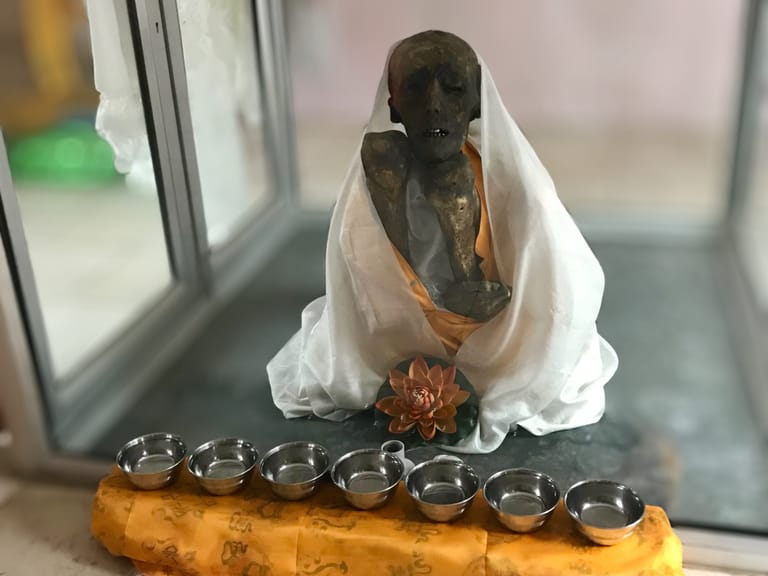
It’s famous for one thing: the naturally preserved mummy of a Buddhist monk named Sangha Tenzin. He’s sitting in a glass box, and you can still see his hair, teeth, and skin perfectly—no chemicals were ever used! In winter, the village is super quiet and the road to Gue is narrow and winds through a deep, rocky valley, so get along with a local driver.
- Location: About 35 km from Tabo (a short 1-hour detour from the main road)
- Duration: 3 hours
- Entry fee: Free
- Food to try: Seabuckthorn tea & local biscuits
6 Amazing Things To Do In Spiti In winter
If you’re thinking that Spiti is just about views, be ready to get surprised. Here are some of the raw, bucket-list experiences that make your Spiti winter travel worth every sub-zero degree.
1. Spot the Snow Leopard in the wild
Winter is the only time the "Ghost of the Mountains" comes down to lower altitudes to find food. In villages like Kibber and Chicham, you can join local trackers to scan the snowy ridges. Discovering a snow leopard in Spiti Valley is one of the best things to do in Spiti in winter.
This period offers a rare chance to see this beautiful cat in its natural home, and since they are most active in the cold, your chances of a sighting are much higher between January and February.
2. Walk on the thick blue ice of the Spiti River
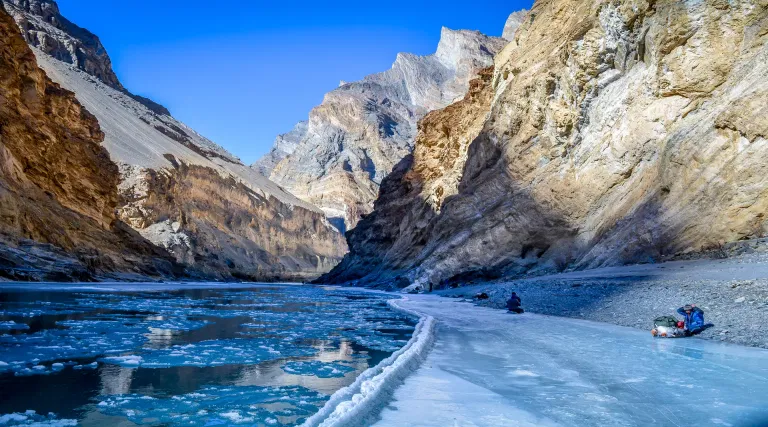
When temperatures drop below -20°C, parts of the mighty Spiti River freeze into a solid, shimmering sheet of blue ice. It feels like walking on a giant glass mirror, and you can sometimes hear the water rushing deep beneath your feet.
This "Chadar" experience is only possible for a few weeks a year, making it one of the most adventurous things to do in the Spiti in winter.
3. Send a postcard from the World’s Highest Post Office
Hikkim sits at a massive 14,400 feet and is famous for having the highest post office on the planet. Even when the snow is six feet deep, the post office stays open for the locals. There is something incredibly special about writing a letter to your family and knowing it will travel through the high mountain passes from this tiny, snow-covered village just to reach their mailbox.
4. Stargaze under the clearest skies in India
Because the winter air is so dry and there is zero light pollution, the night sky in Spiti valley in winter looks like a glittery blanket of diamonds. In high villages like Langza, one of the best spots for photography in Spiti, you can see the Milky Way clearly with your own eyes without any telescope. The air is so thin and clean that the stars shine so bright that it feels like you could reach out and touch them.
5. Stay in a cozy, traditional Spitian Homestay
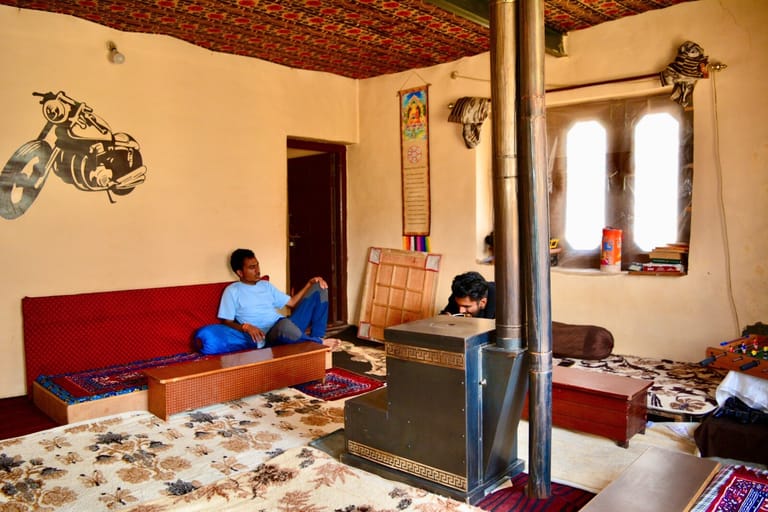
While it is freezing outside, the inside of a local home is a warm sanctuary. You will spend your evenings sitting on colorful rugs around a "Bukhari" (a traditional wood-burning stove) while sipping hot butter tea.
It’s one of the best experiences on your Spiti winter expedition where you’ll learn about the local culture, their hospitality and their art of staying happy in the world’s harshest conditions.
6. Visit The Ice Cafe at Lingti
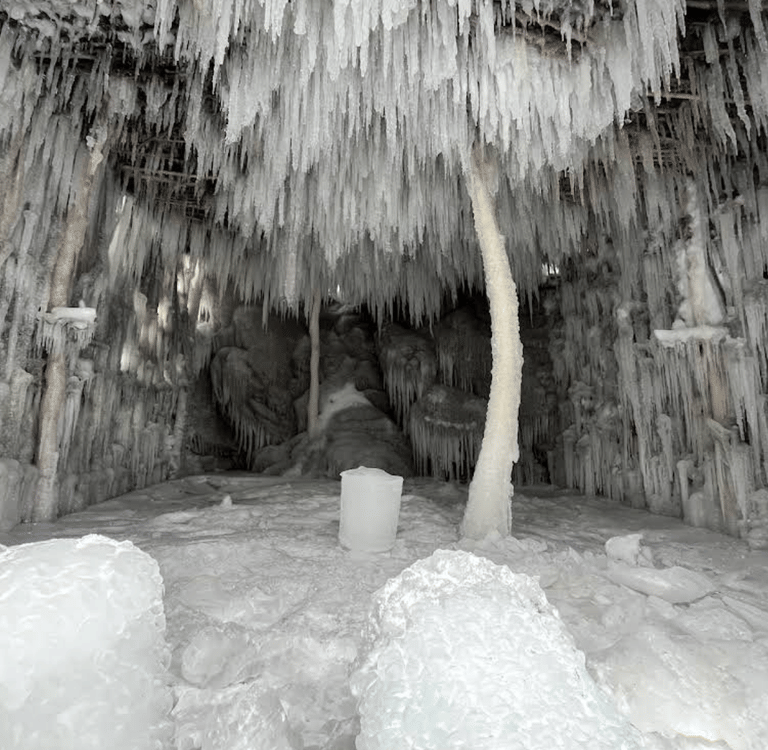
Ever wanted to grab a drink inside a giant ice cube? At Lingti (3,800 to 3,950 m), locals carve a stunning cafe directly into a frozen waterfall, only possible during harsh winter months of January and February!
It’s one of the most unique places to eat in Spiti valley, where you can sit on ice benches and chill, literally inside a glowing blue dome and try hot drinks like tea, coffee, and snacks. It’s easily the most "Instagrammable" pitstop in the entire valley.
Check Out our Popular Spiti Packages
Best Time To Visit Spiti In Winter
Spiti valley in winter keeps evolving month by month where you’ll face different levels of snow and cold, depending on when you go.
- November to December: The heavy snow hasn't usually arrived yet, but the wind is biting. Spiti Valley winter temperature hovers between 5°C during the day and -10°C at night. It’s the best time if you want clear roads but "winter" vibes.
- January to February: This is the "whiteout" season and the best time to visit Spiti in winter for peak snow. Temperatures can reach -25°C or even -30°C. The rivers are frozen solid, and snow is everywhere. This is the peak time for Snow Leopard sightings and the most "unreal" photos.
- March: The sun starts feeling a bit warmer, but the snow is still deep. It’s a great month because you get the heavy snow scenery without the bone-chilling intensity of January. Daytime is around 8°C, while nights stay well below freezing.
How To Reach Spiti In Winter
The nearest airport to Spiti is Bhuntar Airport (250 km) which is closed during winter. The only way to reach is by road, however, you cannot enter Spiti from Manali because the high passes are buried in 20 feet of snow. Here’s how to reach Spiti in winter:
Shimla-Kinnaur Route: The Only Open Route
Unlike the high passes in Manali, this is the only open winter route to Spiti Valley, which the administration works hard to keep open as a lifeline for the locals. This winter Spiti road trip follows the Satluj River and offers a unique and memorable experience.
Route: Shimla - Sarahan or Sangla (7-9 hrs) - Reckong Peo or Kalpa (4-5 hrs; then overnight stay) - Kaza (8-10 hrs)
Staying overnight at a stop like Kalpa helps your body acclimate to the thin air. This is the best way to prevent acute mountain sickness in Spiti before you hit the 12,000 ft mark in Kaza.
Transport options in winter Spiti
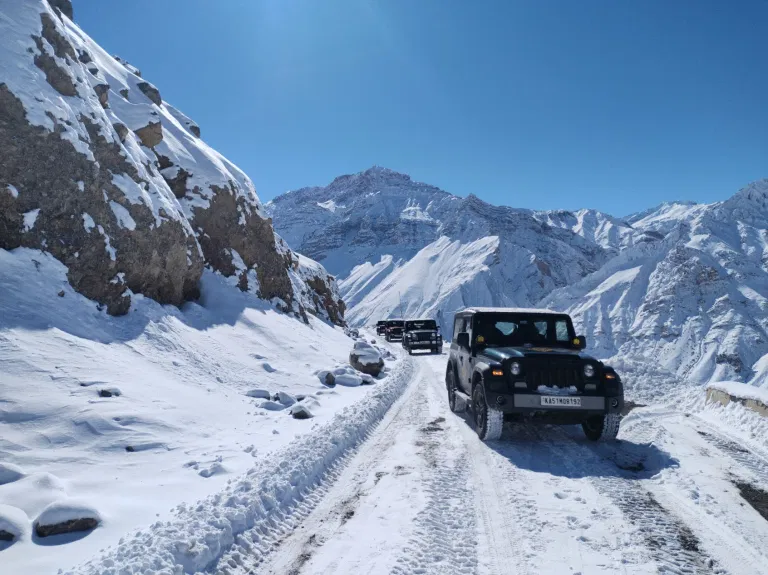
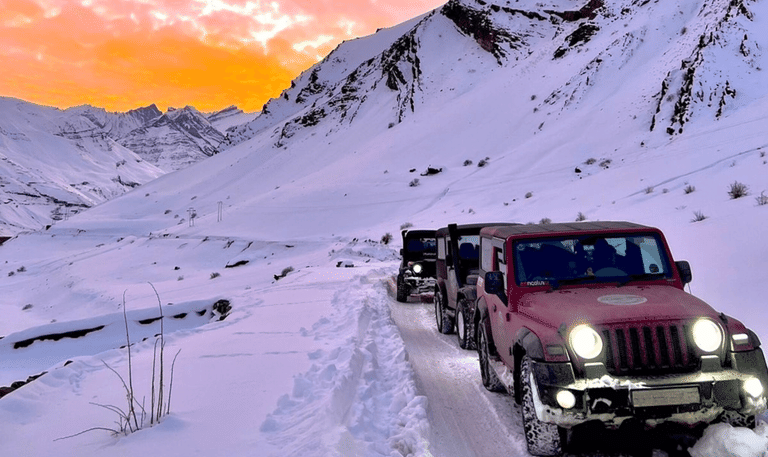
- Local 4x4 Taxis: This is the safest and most reliable option for a Spiti winter expedition. Local drivers from Spiti or Kinnaur know every curve of the road and exactly how to handle a skid on ice. Check out our detailed guide for Spiti Valley road trips to ensure you stay safe and comfortable.
- HRTC Buses: The bravest and cheapest way to travel! One bus usually runs from Reckong Peo to Kaza daily, depending on the weather. It’s a raw, local experience, but be warned: it can be very cold and crowded.
- Self-Drive: Do not try this unless you are an expert at mountain driving with a 4x4 vehicle and snow chains. The roads have "Black Ice" (invisible ice) which is extremely slippery—one wrong turn can be disastrous.
The roads in winter are a mix of dry asphalt, slush, and dangerous "Black Ice" (invisible ice on the road). Landslides can happen near Malling Nallah, and heavy snowfall can shut the road for 24–48 hours at any time.
Therefore, always keep at least two buffer days in your Spiti in winter itinerary. This is one of the best travel tips to Spiti Valley. If a sudden blizzard (severe snowstorm) hits, you might be happily "stuck" in a cozy village for the best Spiti valley tour in winter 2026 for a day while the BRO clears the way.
Exploring Spiti Valley In Winter: Budget Breakdown
Discover how much you really need to set aside for an unreal winter trip to Spiti. Since most of the valley operates in a limited mode, your spending will look a bit different than a summer trip.
Homestays: The climate of Spiti in winter is quite harsh, so most hotels are shut. You’ll be staying in local homestays which cost between ₹1,200 to ₹2,000 per night. This usually includes your stay and a warm, home-cooked dinner and breakfast.
Meals: If you eat at local dhabas for lunch, expect to spend about ₹300 to ₹500 per day. The food is simple, hot, and exactly what you need when it’s -20°C outside.
Transport: This is your biggest expense. A reliable 4x4 vehicle is a must for snow-covered roads. Hiring one for the full circuit (Shimla to Spiti and back) can cost ₹35,000 to ₹45,000. To keep it budget-friendly, travelling with a group of 4 is the key to split the cost.
Winter Extras: You’ll need things like Bukhari (heater) charges at homestays and plenty of hot tea along the way as Spiti Valley winter temperature decreases further. It can be an extra ₹300–₹500 a night, so keep a small buffer of ₹2,000 to ₹3,000.
Total Budget: For a 7-day Spiti trip, a budget of ₹22,000 to ₹32,000 per person (if sharing a vehicle) will give you a legendary experience without any stress.
What To Pack For Spiti In Winter?
Layering is the key for a journey in -20°C, but you definitely do not need to wear a hundred sweaters. Here’s a list of things to pack for a trip to Spiti in winter:
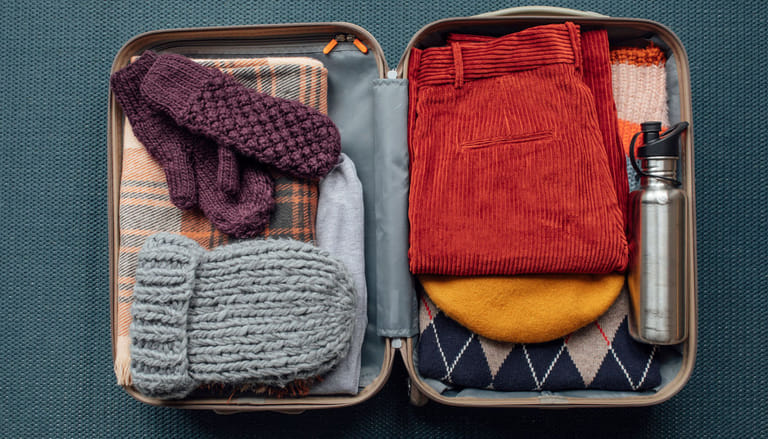
- The Outer Layer: Carry one heavy down jacket (rated for -20°C) and one windbreaker or lighter puffer jacket for layering.
- Mid & Base Layers: Pack two sets of high-quality thermals and two thick fleece or wool sweaters to rotate throughout the week for an effortless winter Spiti trip.
- Footwear: You only need one pair of sturdy, waterproof trekking boots; wear them during travel to save space in your bag.
- Socks & Innerwear: Pack four pairs of thick wool socks and enough innerwear for the full trip, as laundry is impossible in the cold.
- Head & Hands: Carry one woolen beanie, one neck gaiter, and one pair of waterproof mittens with thin liner gloves inside.
- Enough Cash: ATMs in Kaza often freeze or run out of money. So, carry at least ₹10,000–₹15,000 in hard cash from Shimla as digital payments usually fail.
- Snacks & Meds: Bring a small stash of chocolates, energy bars, or ORS for instant energy and hydration. Carry a basic medical kit with your prescribed altitude meds, headaches, stomach upsets, etc.
- Dry Toilet Necessities: Carry plenty of wet wipes and hand sanitizer for the traditional "Dry Toilets". It’s a cool, eco-friendly way to live in the mountains and you’ll be handling it like a pro local in no time!
Spiti Valley In Winter: The Final Take
Spiti Valley in winter is the ultimate reward for your curiosity. It’s a chance to explore raw nature at its best and it truly changes you. While you’ll come for the views, the best part of the journey is actually the people you meet along the way—the friends you share a bonfire with and the songs you end up singing together late into the night.
You could try to DIY a winter Spiti trip, but the mountains are unpredictable. When a snowstorm hits and your engine freezes, you need someone to rely on. Having a Trip Lead who has a satellite phone and a local connection in every village ensures that your Spiti winter expedition is adventurous, not tragic.
Ready to join the best Spiti Valley tour in winter 2026? Connect with our team at WanderOn and let’s discuss your travel goals!